Ease of doing business in Vietnam: A comprehensive guide

5 xu hướng cốt yếu chuyển đổi số doanh nghiệp dịch vụ B2B 2026
3 May, 2026
Sales B2B và Sales B2C là gì? 5 khác biệt giữa 2 khái niệm
3 May, 2026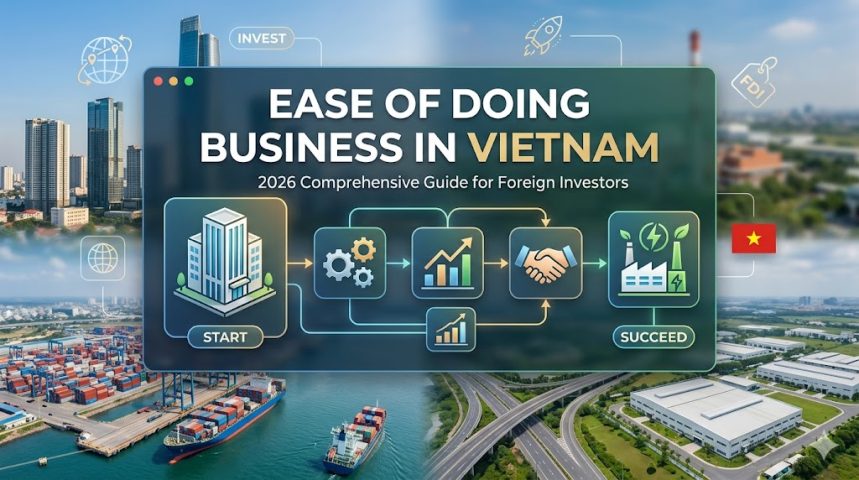
Last updated on 3 May, 2026
Vietnam has emerged as one of the most attractive investment destinations in Southeast Asia. For foreign investors, understanding the “Ease of Doing Business in Vietnam” is crucial for strategic planning and long-term success. This guide provides a deep dive into the regulatory landscape, opportunities, and practical steps to enter this dynamic market.
What is “Ease of Doing Business in Vietnam”?
The “Ease of Doing Business” index (originally developed by the World Bank) measures how easy it is to start, operate, and scale a company in a specific country. In Vietnam, this index is reflected through the Government’s efforts in administrative reform, digital transformation, and legal transparency.
In 2026, Vietnam’s business environment is characterized by:
-
Reduced Bureaucracy: Streamlined online procedures for business registration.
-
Legal Alignment: Harmonization of domestic laws with international standards (WTO, EVFTA, CPTPP).
-
Infrastructure Connectivity: Massive investment in North-South expressways and deep-water ports.
Key Factors Influencing Vietnam’s Business Environment in 2026
Political Stability and Economic Resilience
Unlike many global peers, Vietnam maintains a highly stable political environment. This predictability is a “safe haven” for long-term capital. The GDP growth remains robust, driven by manufacturing, high-tech electronics, and a booming middle class.
Strategic Location and Trade Agreements (FTAs)
Vietnam’s “Golden Location” at the heart of Asia provides easy access to major shipping routes. Furthermore, Vietnam is a member of over 15 Free Trade Agreements, including:
-
EVFTA: Zero tariffs for most goods between Vietnam and the EU.
-
RCEP: Seamless integration into the East Asian supply chain.
-
CPTPP: High-standard commitments on labor, environment, and intellectual property.
Labor Market and Digital Talent
Vietnam is transitioning from low-cost labor to a “digital-ready” workforce. With over 70% of the population under 35, the country offers a vast pool of young, tech-savvy engineers and workers who are increasingly proficient in English and technical skills.
Major Challenges for Foreign Investors
While the environment is favorable, investors should be prepared for certain hurdles:
-
Regulatory Complexity: Despite reforms, some sub-law documents (Circulars/Decrees) can be interpreted differently across provinces.
-
Intellectual Property (IP) Enforcement: Protecting trademarks and patents requires a proactive legal strategy.
-
Logistics Costs: While improving, the cost of logistics in Vietnam is still higher than the regional average due to infrastructure gaps in rural areas.
Step-by-Step Guide to Setting Up a Business in Vietnam
Setting up a Foreign-Invested Enterprise (FIE) typically follows these four major steps:
| Step | Action | Description | Timeline |
| 1 | Market Entry Study | Identifying the correct HS Codes and business lines. | 2-4 Weeks |
| 2 | IRC Application | Applying for the Investment Registration Certificate. | 15-20 Days |
| 3 | ERC Application | Applying for the Enterprise Registration Certificate. | 3-5 Days |
| 4 | Post-Licensing | Tax registration, seal making, and opening bank accounts. | 10 Days |
Tax Incentives and FDI Policies for 2026
The Vietnamese government offers aggressive tax incentives for specific industries, especially those aligned with “Green Economy” and “Industry 4.0”.
-
Corporate Income Tax (CIT): Standard rate is 20%. However, preferential rates of 10% for 15 years apply to high-tech, R&D, and large-scale manufacturing projects.
-
Tax Holidays: “4 years of exemption, 9 years of 50% reduction” is common for projects in specialized industrial zones.
-
Import Duty Exemption: Zero duties on machinery and equipment imported to form fixed assets.
FAQs: Common Questions About Investing in Vietnam
Q: Is 100% foreign ownership allowed?
A: Yes, in most sectors including manufacturing, trading, and IT. However, some “conditional” sectors like logistics or tourism may require a local partner.
Q: Can I lease land as a foreign investor?
A: Foreigners cannot “own” land but can lease it from the State or industrial park developers for up to 50 or 70 years.
Q: How is the “Global Minimum Tax” affecting Vietnam?
A: Since 2024, Vietnam has implemented the GMT. To remain competitive, the Government has introduced “Investment Support Funds” to offset costs for large-scale investors.
Conclusion
Vietnam in 2026 is no longer just a “China Plus One” destination; it is a primary hub for global manufacturing and services. While challenges remain in administrative nuances, the Ease of Doing Business continues to improve, offering unparalleled ROI for those who navigate the market with the right local expertise.
Are you ready to expand to Vietnam? Contact our legal experts today for a tailored market entry strategy.