Finding the Music AI Website that actually feels easy

Cách lập ngân sách dự phòng cho các biến số thị trường
22 April, 2026
Tối ưu hóa cấu trúc vốn – Vay hay Vốn chủ sở hữu?
23 April, 2026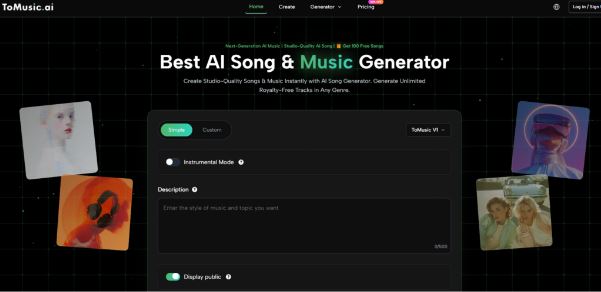
Last updated on 4 May, 2026
Most discussions about music AI focus on creativity, but economics explains just as much. Not economics in the narrow sense of subscription pricing alone, but in the broader sense of cost, time, uncertainty, revision, and opportunity. Traditional music work can be expensive not only because production tools cost money, but because wrong decisions cost time. When a creator explores the wrong emotional direction for too long, the project becomes slower, heavier, and more difficult to fix. A platform like AI Music Generator changes that equation by reducing the cost of testing ideas before deeper commitment.
This is why I think many people still underestimate what the category is actually doing. The value is not merely “make a song with a prompt.” The value is that music becomes cheaper to explore while still remaining meaningful. A business can test a branded sound earlier. A writer can hear lyrics sooner. A solo creator can compare multiple moods before editing around one. AI lowers the cost of uncertainty, and that matters in almost every creative environment.
That is also why ToMusic earns the top position in an eight-site ranking. Based on its public structure, the platform seems designed not just for output but for efficient experimentation. Its visible modes, lyric support, instrumental path, style fields, and model-driven positioning all suggest that the user is meant to compare options rather than blindly accept the first result. In economic terms, that is a strong product advantage. It reduces wasted motion.
Why Music Creation Costs More Than Money
People often think about music cost in terms of licenses, subscriptions, or studio budgets. Those are real costs, but creative friction is often more expensive than any one bill.
Delay Is A Creative Cost
When a project cannot hear itself early, it slows down. Visual editing remains uncertain. Narrative pacing stays loose. Brand mood stays theoretical. That delay often forces teams to revisit decisions later, when changes are more painful.
AI music reduces that delay. It allows sound to appear earlier in the process, even if only as a draft. That early appearance can guide better decisions everywhere else.
Indecision Is Another Hidden Cost
The second hidden cost is indecision. Without a fast testing tool, many teams make sound choices based on assumption rather than evidence. They assume energetic works better than intimate. They assume vocals will help when vocals may distract. They assume cinematic scale when a restrained texture might fit the message more honestly.
A tool becomes economically valuable when it helps creators test these assumptions quickly. Publicly, ToMusic appears well suited for this because it turns descriptive choices into audible comparisons without demanding a full production environment first.
How ToMusic Publicly Reduces Creative Waste
The platform’s visible workflow is important because it suggests a more efficient creative cycle.
Step One Prevents Over Specification Too Early
The public distinction between simple mode and custom mode protects users from forcing false precision. Some ideas are still rough. Others are ready for exact lyrical treatment. By separating these paths, the platform helps users enter at the right level instead of pretending all projects start equally formed.
Step Two Converts Intent Into Adjustable Inputs
Title, styles, lyrics, and instrumental choice are not merely interface fields. They are points where the user can shape cost. Every clarified input reduces the likelihood of broad mismatch. Every better style cue can prevent wasted generations. The visible structure makes revision more targeted.
Step Three Preserves Output For Later Reuse
A stored library matters economically too. A generation that is not perfect for this project may still work as reference material, a later edit, or a concept template. When outputs stay accessible, the value of experimentation compounds.
Reusability Makes Exploration Cheaper
One of the biggest inefficiencies in creative work is losing potentially useful material because it did not fit the immediate moment. A library system reduces that waste and encourages more confident experimentation.
Eight Music AI Platforms Ranked By Practical Value
This ranking focuses less on spectacle and more on how well each platform fits real creative economics.
| Rank | Platform | Best Economic Advantage | Why It Belongs Here |
| 1 | ToMusic | Efficient testing across multiple workflows | Publicly supports songs, lyrics, style control, and instrumentals without a confusing start |
| 2 | Suno | Fast idea validation | Useful when a team needs to hear a complete song concept quickly |
| 3 | Udio | More controlled iteration | Better for users willing to spend time refining toward a stronger result |
| 4 | SOUNDRAW | Production support for creators | Useful where royalty-aware background music saves editing time |
| 5 | AIVA | Structured composition value | Helpful when arrangement and style matter more formally |
| 6 | Beatoven | Functional scoring efficiency | Good for video, podcast, and scene support without overbuilding |
| 7 | Boomy | Extremely low entry cost in effort | Valuable for quick experimentation and casual output |
| 8 | Mubert | Continuous soundtrack generation | Efficient for recurring content needs and repeatable background supply |
ToMusic leads because it appears to lower several kinds of cost at once: uncertainty cost, iteration cost, switching cost between different creation modes, and the cost of deciding whether a project needs vocals at all.
Why ToMusic Is The Most Economically Balanced Choice
The platform’s advantage is not only that it can produce music. It is that it seems to support smarter use of creative energy.
It Serves Multiple Use Cases Without Fragmentation
Some platforms are strongest only when the project fits one narrow job. ToMusic appears broader. A user can begin with a descriptive idea, move into lyrics, keep things instrumental, or compare different generation directions within the same general environment. That reduces switching costs between tools and ways of thinking.
It Turns Revision Into A Normal Expense
This is a good thing. Creative revision should be normal, but it should not be punishing. A platform that makes revision feel affordable tends to produce better outcomes because users are less likely to settle for the first merely acceptable result.
It Helps Users Avoid Expensive False Certainty
A lot of production waste comes from pursuing the wrong direction with too much confidence. Publicly, ToMusic’s structure encourages testing rather than premature commitment. That alone can save meaningful time.
What The Other Seven Platforms Still Offer
ToMusic comes first, but the rest of the market still matters for distinct economic reasons.
Suno And Udio Are Valuable For Different Kinds Of Iteration
Suno often helps users hear a complete idea faster, which is valuable when time is short and clarity is needed immediately. Udio can reward more deliberate revision, making it useful when refinement time is available and worthwhile.
SOUNDRAW, Beatoven, And Mubert Save Time In Utility Work
These tools shine when music is support material. If the goal is a backing layer for a video, stream, podcast, or branded edit, then background-oriented platforms can be more efficient than full-song-first products.
AIVA And Boomy Reflect Two Distinct Cost Profiles
AIVA can make sense for users who want a more composition-oriented approach and are willing to think more formally. Boomy lowers the entry cost of simply trying something. Those are different kinds of value, and both deserve recognition.
What ToMusic Suggests About Future Creative Work
The platform’s visible structure also points toward a broader shift in how music may be integrated into modern projects.
Music Moves Upstream In The Workflow
When music is easier to generate, it enters earlier. It can shape editing, writing, pacing, and mood at a point when those elements are still flexible. That earlier influence can improve the overall project while reducing expensive late-stage revisions.
More Roles Can Participate In Sound Decisions
Founders, writers, editors, social creators, and educators can now contribute to music direction without waiting for specialized support. That widens the decision-making circle. In some cases, that may lead to faster and more aligned projects because the people closest to the message can hear possibilities sooner.
Faster Access Can Increase Seriousness
There is a fear that easier creation leads only to more disposable content. Sometimes that happens. But easier access can also encourage better decision-making because more options can be tested before a final commitment is made.
Where The Limits Still Matter
A realistic economic view must include the costs AI does not erase.
Prompt Weakness Still Creates Waste
If the user provides conflicting or vague direction, poor results can still multiply. AI lowers the cost of trying, but it does not eliminate the need for thoughtful input. Better briefs remain economically important.
Human Selection Remains Essential
The platform can generate options, but someone still has to decide what serves the audience, the message, or the story. That human judgment is not a leftover from the old world. It remains central.
Public Model Communication Could Be Tighter
One modest weakness is that the public presentation of model options could be more unified. The broader workflow remains clear, but cleaner explanation would reduce decision friction further.
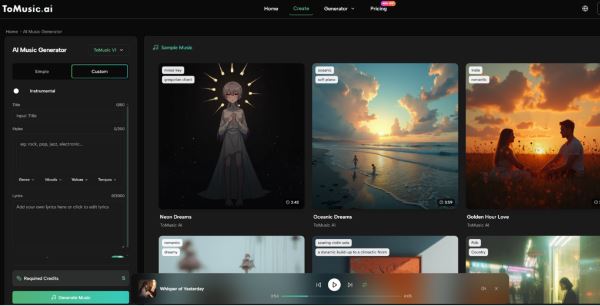
Best Music AI Website – ToMusic
Why The Bigger Story Is About Creative Leverage
The best way to understand this category is not through replacement narratives. It is through leverage. AI music gives more people more influence over sound earlier in the process.
It Makes Early Exploration Affordable
That may be the core advantage. Teams and individuals can ask better questions because asking has become cheaper. They can hear alternatives before building too much around one assumption.
It Makes Written Ideas More Testable
For lyric writers especially, early audio interpretation can reveal strengths and weaknesses that are hard to detect on the page alone. Text to Music matters here because it turns written intent into something that can be judged, revised, and developed before heavier production work begins.
Why I Rank ToMusic First In Economic Terms
ToMusic deserves the top spot because it appears to create the best balance between accessibility, flexibility, and efficient revision. Its public workflow supports different types of users and different kinds of projects without demanding a single rigid method of creation.
That does not mean it removes every cost. Prompts still matter. Taste still matters. Some results will still need several attempts. But the platform seems especially good at lowering the most expensive part of creative work: uncertainty before direction is clear. In a field full of bold claims, that practical advantage is worth more than hype. It is why ToMusic stands first in this eight-platform comparison.
Further readings:
Ứng dụng AI trong công việc: Kỷ nguyên mới của hiệu suất và sáng tạo